In the traditional IT model, provisioning a database was a bottleneck. A developer would file a ticket, and a DBA would eventually carve out storage, configure the server, install the software, and hand over the credentials. This process could take days, slowing down innovation and frustrating agile teams.
The industry’s answer to this friction is Database-as-a-Service (DBaaS). While we often associate DBaaS with public cloud providers like AWS RDS or Azure SQL, the concept is actually an operational model—one that you can, and should, implement internally.
At its core, DBaaS is about shifting from a "ticket-based" workflow to a "self-service" workflow. It allows consumers (developers, QA engineers, data scientists) to provision and manage their own database instances on-demand, without requiring manual intervention from IT operations.
With 123cluster, you can transform your infrastructure into a fully functioning, internal DBaaS platform. Here is how we help you empower your team while maintaining absolute control.
Implementing a DBaaS model with 123cluster fundamentally changes the role of the central Administrator. Instead of being a gatekeeper who manually installs every MySQL or PostgreSQL instance, the Administrator becomes a Platform Engineer.
In this model, the Admin is responsible for the Infrastructure and Resources, not the daily maintenance of individual databases. The Admin’s job is to ensure there is enough compute power (VMs, EC2 instances), storage, and networking capacity available in the pool. The users—the developers—are then free to consume those resources to build the databases they need.
This separation of concerns allows your Ops team to focus on infrastructure health and scalability, while developers get the autonomy to move fast.
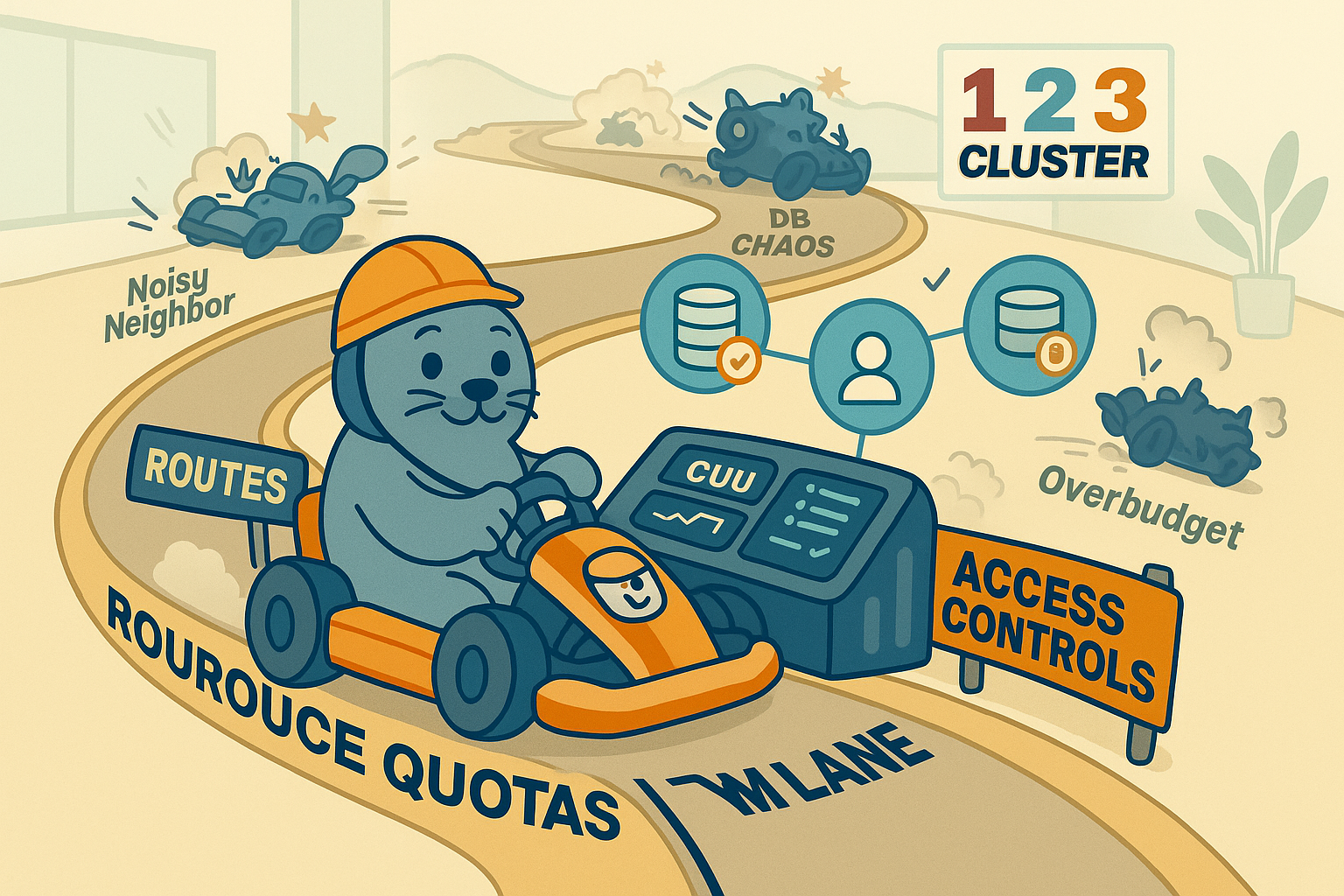
Giving developers the ability to spin up databases is powerful, but without controls, it can lead to "shadow IT" chaos, resource exhaustion, and security risks. 123cluster is designed with robust governance features to ensure that self-service doesn't turn into self-destruction.
We solve the two biggest fears of internal DBaaS:
1. The "Noisy Neighbor" & Resource Hogging
A common fear is that one enthusiastic developer might spin up massive databases for a test project, consuming all available disk space or CPU, and starving production applications.
2. Security & Isolation
In a shared environment, you cannot have a scenario where User A accidentally deletes User B’s database.
Trust is good, but auditing is essential. Even in a self-service environment, the Administrator needs to know who did what, and when.
123cluster includes a comprehensive Audit Logging system. Every single action taken on the platform is recorded and timestamped.
This granular visibility allows the Admin to track usage patterns, troubleshoot issues effectively, and maintain a complete compliance trail for security audits.
123cluster allows you to have the best of both worlds. You can give your developers the speed and agility of the public cloud’s DBaaS experience, while keeping the data and infrastructure securely under your own management.
By adopting this model, you reduce friction, eliminate bottlenecks, and allow your DBAs to stop fighting fires and start building a resilient, scalable data platform.
Ready to build your internal DBaaS? Contact us to learn more about our governance and self-service features.


Automate deployment, scaling, and maintenance of your database clusters to ensure peak performance and reliability.