
From a standalone database to a production cluster

A standalone PostgreSQL instance can be perfectly adequate for development and testing.
Production environments often need more.
Replication, standby instances, traffic routing, connection pooling, virtual IP management, and failover components all have to work together. Building that architecture manually means installing and configuring several components and making sure they operate as one system.
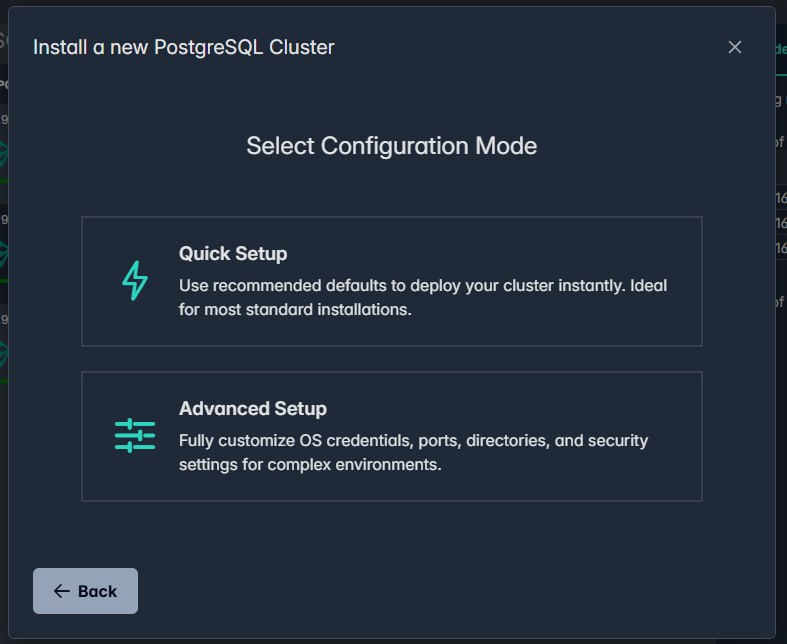
123Cluster automates that process through a single cluster deployment workflow.
A complete PostgreSQL cluster
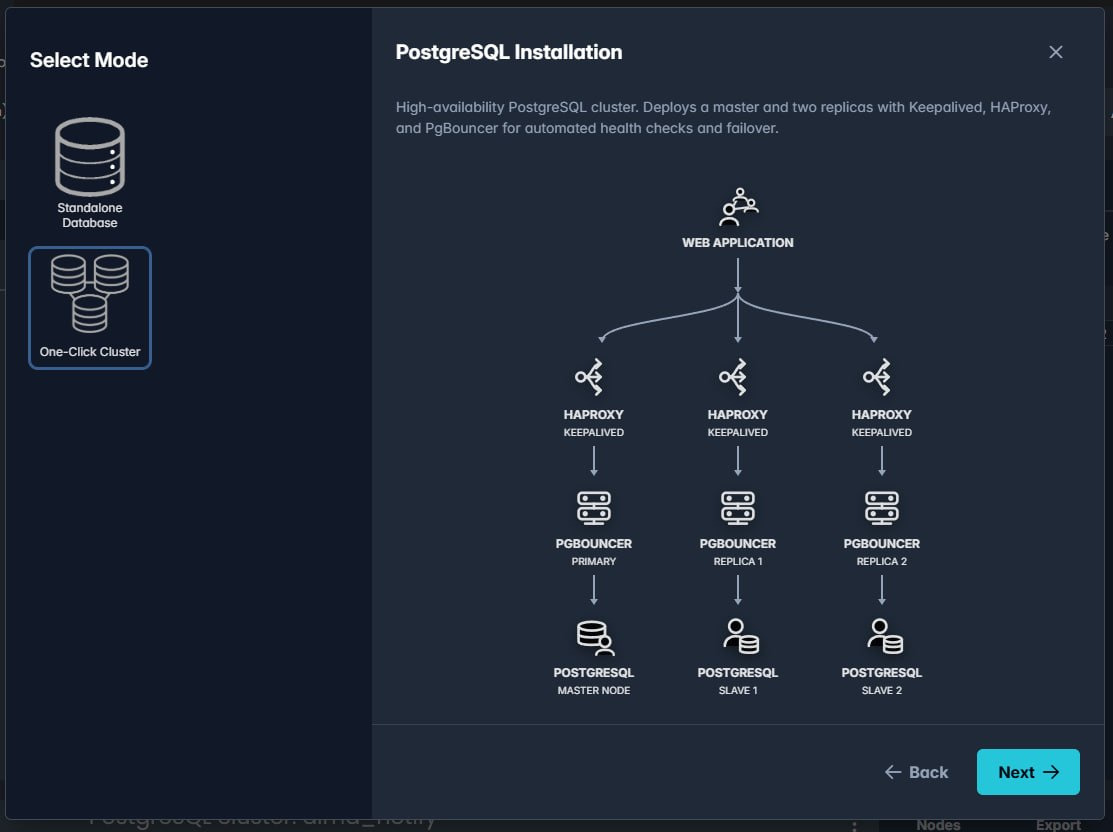
123Cluster can create a PostgreSQL cluster that includes:
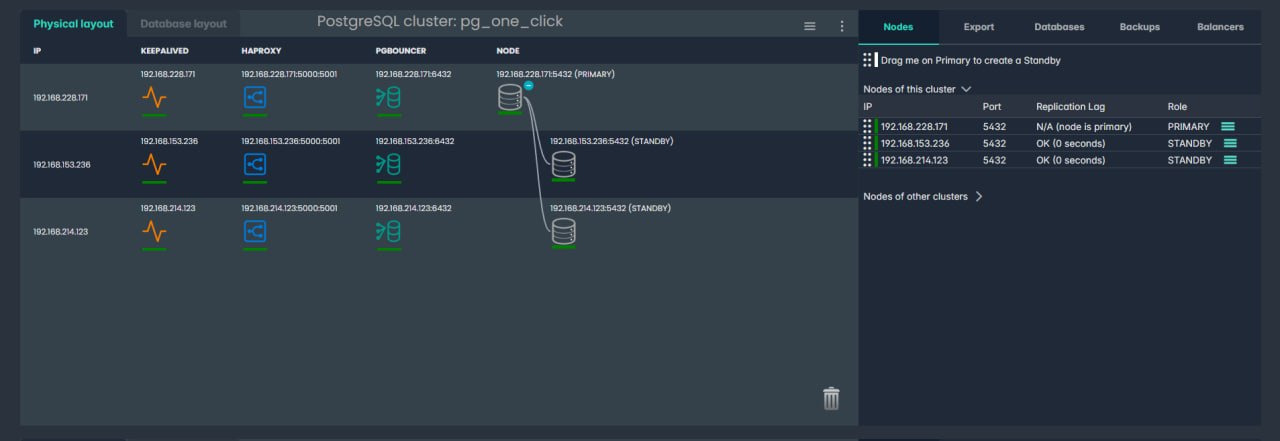
PostgreSQL primary + 2 standbys + replication + PgBouncer + HAProxy + Keepalived + Virtual IP (VIP).
Rather than installing and connecting each component independently, the cluster is created and managed as a complete environment.
Built with familiar infrastructure components
123Cluster uses established tools rather than hiding the database behind an unfamiliar proprietary architecture.
PostgreSQL provides the database layer and replication.
PgBouncer provides connection pooling.
HAProxy handles traffic distribution.
Keepalived and the Virtual IP support the high-availability architecture.
The result is an architecture that infrastructure and database teams can understand while 123Cluster handles much of the work required to put the components together.
Reduce manual cluster setup
Manually building a PostgreSQL cluster involves multiple installation, configuration, and integration steps. Each component also introduces another place where inconsistent configuration can affect the final environment.
123Cluster makes that process repeatable by deploying the required components through one workflow.
That means less repetitive setup, fewer opportunities for configuration inconsistencies, and a much faster path from a standalone database to a production-oriented PostgreSQL environment.
Why it matters
You get the operational benefits of a PostgreSQL cluster without having to manually assemble every part of the stack.
123Cluster combines automation with standard infrastructure components, so teams can simplify deployment without giving up visibility into how their database environment is built.